Uncategorized
Debt Collectors Are Calling My Office Mates and Family, What Should I Do?
Few things feel more violating than this. You fell behind on a loan, and now the collectors are calling your boss, your officemates, your parents, airing your debt to people who have nothing to do with it. The shame can be crushing. But take a breath, because here is what you need to know first: what they are doing is illegal, and you have clear steps to make it stop.
💡 Highlights
- Contacting your family, friends, or officemates to shame or pressure you is against the law.
- Collectors may only contact a co-maker or guarantor who actually signed onto your loan, no one else.
- Do not let the embarrassment push you into panic-paying or hiding. Act calmly instead.
- Give your contacts a quick heads-up that this is an illegal scare tactic they can ignore.
- Document everything, then send a written demand for them to stop and report them.
- You can report this to the SEC and the National Privacy Commission.
- The harassment is separate from the debt, so handle both, but know your rights come first.
Is It Even Legal for Them to Contact My Family and Officemates?
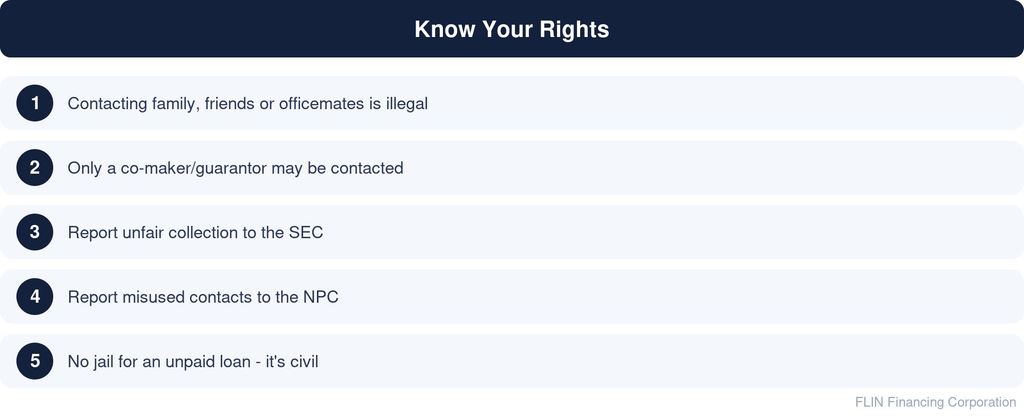
No, it is not. This is one of the clearest violations in debt collection. Under SEC rules on unfair debt collection and the Data Privacy Act, a lender or its collectors cannot contact the people around you to embarrass or pressure you into paying.
The only exception is narrow: they may contact someone who is a co-maker or guarantor on your loan, meaning a person who actually signed on and shares the obligation. Your officemates, your boss, your parents, your friends, and random people on your phone are not that. Reaching out to them about your debt is illegal, full stop.
Why Are They Even Doing This?
Because shame is a weapon, and they are betting it will make you pay faster. This tactic is especially common with online lending apps. When you installed the app, it likely asked for access to your contacts, and then it harvested your entire phone book. Now it uses that list to humiliate you, hoping the fear of being exposed will scare you into paying.
Understanding this helps, because it takes away their power. They are not doing this because they have some legal right. They are doing it precisely because it is against the rules but emotionally effective. Once you see it for the illegal pressure tactic it is, you can respond from a place of control instead of panic.
What Should You Do Right Now?
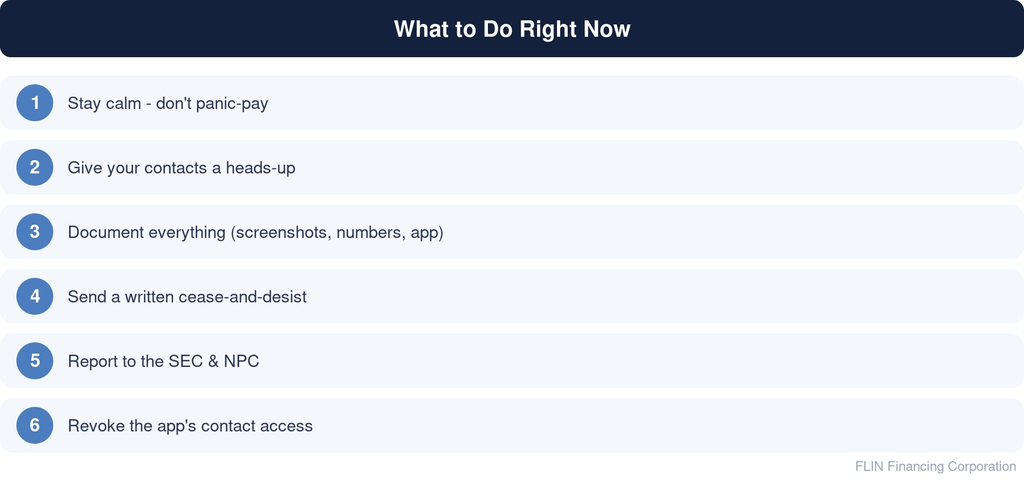
Here is your step-by-step response.
Stay calm and do not panic-pay
The whole point of shaming you is to make you act out of fear. Do not let it. You can handle this methodically.
Give your contacts a heads-up
Message the people likely to be contacted, your close family and a trusted officemate, and let them know a lending app may message them using an illegal tactic. Tell them they can simply ignore it, that it is not their debt, and that they owe nothing. This takes away the collector’s main weapon, your fear of being exposed, because now your people already know.
Document everything
Screenshot every message sent to you and to your contacts, with dates and times. Save call logs and the numbers used. Note the app name and the company behind it. This evidence is what makes your complaint stick.
Send a written cease-and-desist
Message the collector clearly and firmly that contacting third parties is illegal under SEC rules and the Data Privacy Act, that you are documenting their actions, and that all communication must go through you only. Often, just showing that you know your rights makes them back off.
Report them
You can file a complaint with the SEC against the lending company for unfair collection, and with the National Privacy Commission for harvesting and misusing your contacts. These complaints have teeth, since violators face heavy fines and can lose their license.
Revoke the app’s access
Go into your phone settings and cut off the app’s permission to your contacts, then consider uninstalling it. Preserve your evidence first before deleting anything.
Can I Make Them Stop Permanently?
Yes, reporting is what forces real change. Regulators have been cracking down hard on apps that do exactly this, barring them from harvesting contact lists and ordering them to delete data they grabbed illegally, on top of fines. When you file with the SEC and the NPC, you are not just protecting yourself, you are adding to the case that can get an abusive operator shut down for good. The more borrowers report, the harder it becomes for these apps to keep operating.
What if My Family and Officemates Are Upset or Worried?
Reassure them, because this is probably weighing on you as much as the debt itself. Let them know three simple things: this is a known illegal tactic, they are not responsible for your debt in any way, and they owe nothing to anyone. Most people, once they understand it is harassment and not a real legal matter, are far more understanding than you fear. The collector is counting on your silence and shame. Taking the secret away from them, by being upfront with your people, is often the most freeing thing you can do.
Does This Make My Debt Go Away?
No, and it is important to separate the two. Stopping the harassment is about your rights and dignity. The debt itself is a separate matter that still needs a plan. You can be completely in the right about the illegal collection while still owing a legitimate balance. And remember, you cannot be jailed for an unpaid loan, so you are dealing with all of this from a position of safety, not fear.
One note: this article is general information, not legal advice. For a serious case, especially one involving threats, you can also get free legal help from the Public Attorney’s Office if you qualify.
Dealing With the Debt Behind the Calls
Once the harassment stops, the lasting relief comes from getting the debt itself under control, because for many people this all started when several loans piled up past what their salary could cover. The answer is not another loan app to patch the gap, which only feeds the cycle.
FLIN helps salaried Filipinos combine high-interest debts, online loans, credit cards, and buy-now-pay-later balances, into one more manageable monthly payment. It’s a way to relieve your life from a strenuous debt pressure with a solution that no one can offer. Click below to start free consultation.
Are you having problems with debt? Read articles below for more tips:
Your Debt-Free Life Start Here
Consult with us and get the best solution based on your financial condition